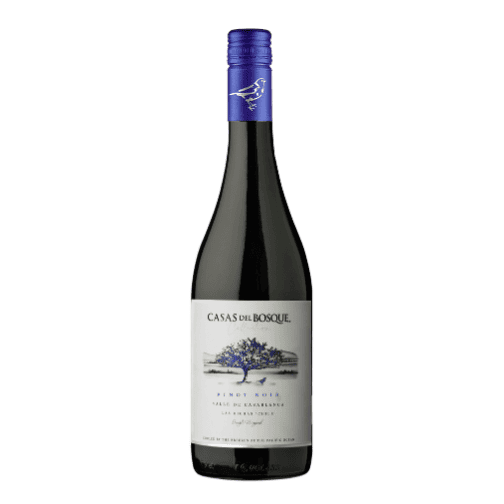
Casas del Bosque Collection Pinot Noir 2024
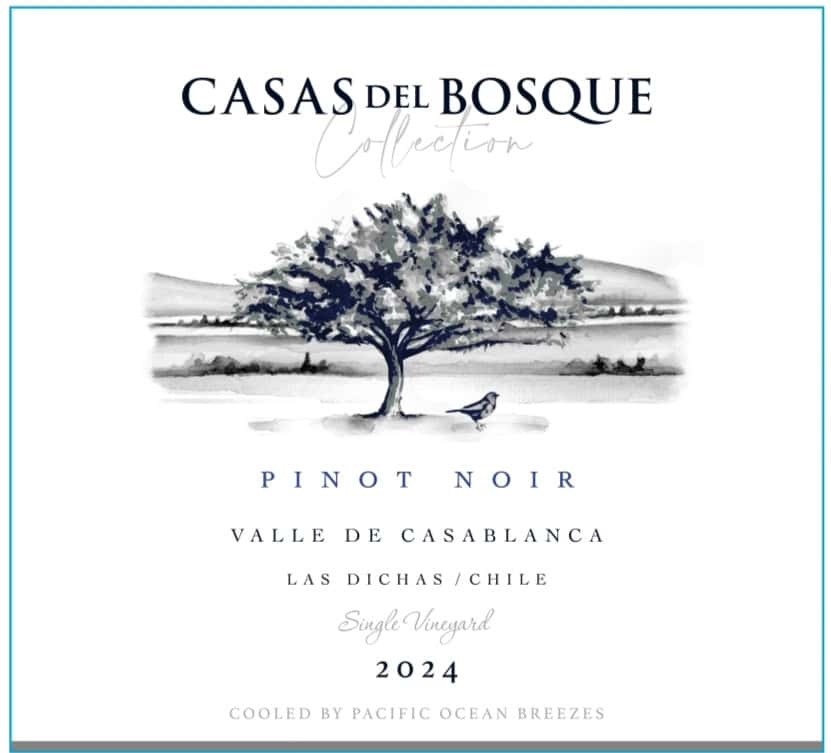
Lighter color, typical of cool climate Pinot Noir. Red cherries and strawberries on the nose and a hint of earthiness shows up. The wine showcases a fresh fruit profile combined with a rose petal character. On the background, an elegant licorice note appears, imparting complexity. Palate is round, with elegant and light body. Delicate extraction delivers soft and refined tannins. Acidity is there and imparts freshness. A saline aftertaste is the distinctive feature from this cool site.
“The 2024 Pinot Noir Botanic Series from Las Dichas, Casablanca (Valparaíso Region), is straightforward and fruit-driven, with cherry, strawberry, a touch of stem and a hint of peach. Dry, smooth and lightly textured, it finishes with clarity and simplicity.”
91 Points – Vinous, Joaquin Hidalgo
“From coastal vineyards comes this easygoing and enjoyable Pinot Noir. Delicate notes of raspberries introduce a lively palate of tart cherries and a touch of spices. It pairs well with a charcuterie board and a relaxed movie night at home.”
89 Points – Wine Enthusiast
Origin: Single vineyard, Casas del Bosque Estate, Casablanca
Terroir/Soil: Tapihue Sandy Loam and Lo Vasquez Clay Loam soils. The vineyard is 18 km from the Pacific Ocean at 250 m altitude.
Vineyard and Climate Conditions: Vineyard located within the coolest, westernmost reaches of the Casablanca Valley. Grown on flatter soils and planted between 1999 and 2008, equipped with drip
irrigation. Crop levels are an average of 6 tons per hectare (2.4 tons per acre). No spring frosts affected our Pinot Noir parcels, although daily average temperatures at bloom were very low. The ripening season was warm and sunny. All grapes were hand harvested by the end of March.
Winemaking:
The fruit is partially destemmed and cold soaked for 2-3 days. Selected yeasts were inoculated and once the alcoholic fermentation began, we started managing the cap with both punch downs and pumping over. We kept an eye on avoiding over extraction towards the end of primary fermentation. Malolactic fermentation was induced by inoculating the wine with selected lactic bacteria.
Aging:
– 10% of the final blend spent 10 months into new French oak barrels.
– 40% of the final blend spent 10 months into old (up to 5 th use) French oak barrels.
– 50% remained into stainless steel over its fine lees. After the elevage the wine was racked into stainless steel and the blend was fined with inactivated yeasts. A total of 9,600 cases was produced.
Analysis:
Alcohol: 13 %
Total Acidity: 6 g/l
Residual Sugar: 2 g/l
Volatile Acidity: 0.47 g/l